
Commercial property insights
Concrete saw cutting in warehouse renovations: why coordination matters
A warehouse renovation is a change to a working system. Concrete cutting connects the existing building to what comes next, so the surrounding operation matters as much as the line on the floor.
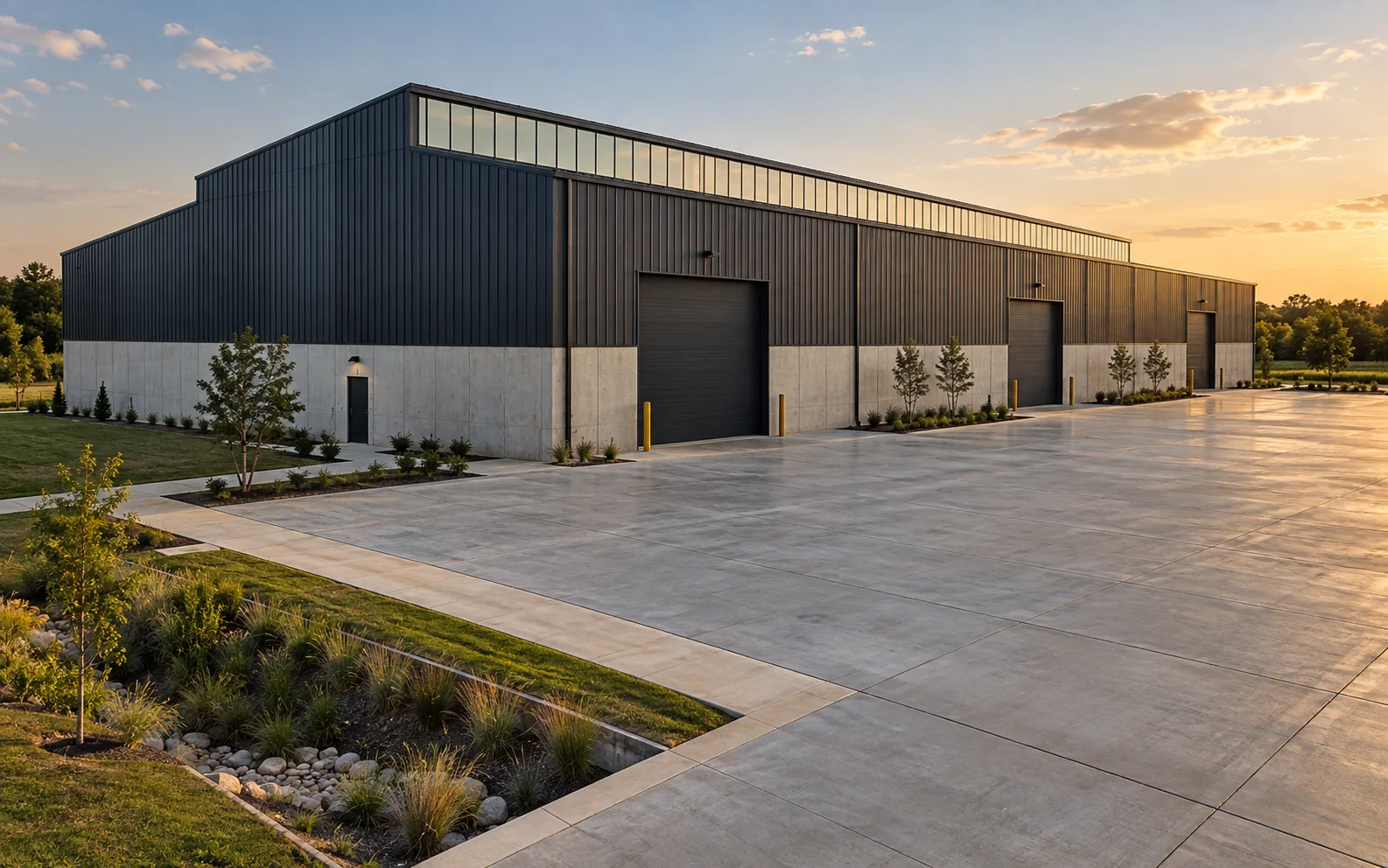
The concrete floor is part of the operation
In a warehouse, the slab supports more than the room’s appearance. It sits beneath the routes, equipment and activities that give the building its purpose. When the use of a space changes, concrete work may become one part of a larger sequence involving design, building services and new finishes.
Imagine a distribution building being adapted for a different tenant. The project might include revised service routes, a changed equipment layout or alterations near a loading area. These are illustrative situations, not a single formula for every warehouse. The building’s requirements determine which changes are appropriate.
What role can saw cutting play in a renovation?
Saw cutting can define the boundary of planned work in existing concrete. Core drilling can create circular openings. Removal deals with material taken out of the area. A renovation may bring these activities together, but each has a distinct role.
The difference matters because a cut is not automatically a completed opening, and an opening is not automatically a finished floor. Other stages may follow. Understanding the handoff helps an owner see why concrete work belongs within the overall renovation plan rather than as an isolated task.
The drawing, the building and the next trade
A drawing communicates a proposed change. The existing building provides the physical conditions in which that change takes place. The next trade depends on the result. Those three perspectives meet at the concrete scope.
For example, an opening described by a building-services team has an intended purpose beyond its shape. Its relationship to the surrounding space matters. Existing conditions also cannot be fully understood from a surface photograph. Project-specific design and review supply information that a general educational article cannot.
Why clear responsibilities make the project easier to understand
The National Ready Mixed Concrete Association’s guidance on preconstruction meetings emphasizes defining responsibilities and communication between participants. Its focus is concrete construction; the same communication principle offers a useful way to understand a renovation: different parties need a shared description of the work.
From an owner’s perspective, clear responsibilities make the sequence legible. The cutting scope, the removal scope and the work that follows can be described separately while remaining connected. This is a coordination concept, not a prescribed construction method or a promise that every project follows the same schedule.
An occupied property adds another layer
A warehouse may continue to receive goods, move staff or serve neighboring tenants during portions of a renovation. In that setting, the work area exists alongside an operation that has its own priorities.
Access, communication and the boundaries between activities become part of the project discussion. The useful question is how the concrete scope fits the planned change to the property. That keeps attention on the outcome the building needs, instead of treating every cut as an interchangeable item.
Why consider True Sawing for commercial concrete work?
True Sawing brings 15+ years of experience and a record of 50+ projects to commercial and civil concrete work in Dallas–Fort Worth. Our services include saw cutting, core drilling, concrete removal and saw-cut sealing. For a warehouse team, that combination of experience and related concrete services is a useful starting point for a project conversation.
Our educational articles make the terminology easier to follow before that conversation begins. Explore True Sawing’s concrete services, see our portfolio, or contact True Sawing to introduce your commercial project.
Common questions
Is warehouse concrete cutting only used for demolition?
No. It can relate to a defined alteration, an opening or another planned change in existing concrete. Its purpose comes from the project scope.
Are cutting and concrete removal the same stage?
They describe different activities. Cutting creates a boundary or opening path; removal takes material out. The project sequence determines how they connect.
Why does this guide discuss coordination instead of cutting dimensions?
Dimensions and methods depend on the particular building and design. This guide explains the role of concrete work so commercial property teams can understand the larger project conversation.